

The Real Math of Fuel Management: Controlling Your Largest Variable Cost
The Real Math of Fuel Management
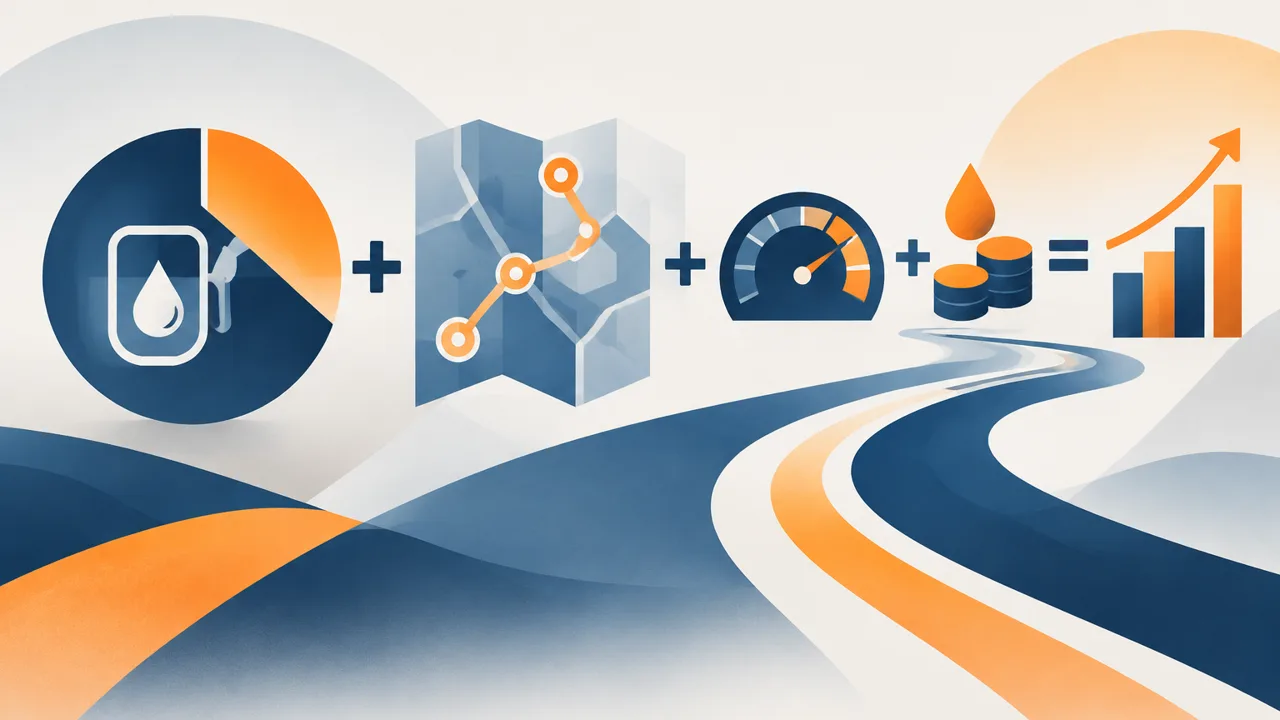
The biggest mistake small fleet owners make is treating fuel as a fixed cost. They look at the board at the truck stop, swipe a generic card, and hope the rebate check justifies the detour; in reality, fuel is a volatile variable that can be manipulated through smarter routing and aggressive negotiated rates.
Most operators are leaving money on the table because they lack the data to see the "landed cost" of their diesel. This guide breaks down how to move beyond standard cards to create a high-yield fuel strategy that protects cash flow through the intersection of purchasing power, driver behavior, and automated compliance.
Why passive fuel management fails
A standard fuel card is often just a credit line with a minor discount attached, rather than a tool for accessing wholesale prices. Efficiency is lost when systems do not communicate, leading to several common points of failure:
- Route Deviations — Drivers add unpaid miles to chase a cheaper pump price that does not offset the extra fuel burned.
- IFTA Reporting — Manual data entry and disconnected receipts lead to errors and audit risks.
- Cash Flow Gaps — Lack of integration with factoring prevents drivers from having liquidity for diesel without waiting 30 days for an invoice to clear.
- Out-of-Network Penalties — Specific locations charge fees or offer no discounts, quietly eroding per-mile profitability.
The pillars of a high-yield fuel program
Accessing deep discounts and managing volume requires a coordinated effort between purchasing and telematics to ensure that every gallon pumped contributes to the bottom line.
1Deep Tiered Discounts
Access a network where the "cost-plus" pricing model is passed directly to the fleet regardless of its truck count. This allows independent owner-operators to rival the rates of a 500-truck carrier.
2Real-Time Price Transparency
Provide drivers with an app that shows the net price, which is the retail price minus the discount, along their specific route. This removes the distraction of the retail pump price.
3Strict Transaction Controls
Implement limits on non-fuel purchases and daily gallon caps. These controls are essential to prevent fraud and unauthorized spending across the fleet.
4IFTA Tracking Software Integration
Link every gallon pumped to the exact odometer reading and state line crossing recorded by the ELD. This eliminates manual errors and creates an audit-ready report from a single data source.
The 90-day fuel optimization playbook
To move from passive to active management, fleets should follow a structured timeline to audit their spend and enforce better habits.
- Baseline Audit: Review the last three months of fuel spend and IFTA filings to identify the gap between what you paid and market rates. The goal is to document the average price per gallon against national benchmarks.
- System Integration: Onboard a fuel card with deeper network access and sync it with your existing ELD and dispatch software. This establishes a baseline for automated data flow from the pump to the back office.
- Route Enforcement: Train drivers to use price-discovery tools and mandate fueling at high-discount locations. Success is measured by achieving 90% of all fuel purchases at preferred locations.
How ELD HUB helps
ELD HUB levels the playing field for small fleets by providing a Fuel Savings Card that offers trucking fuel discounts usually reserved for the industry's largest players. By combining this purchasing power with 1% to 2% flat-rate factoring and integrated ELD compliance, we provide a single dashboard to manage your largest expenses. Our team helps operators perform a quick audit of current fuel spend to see how much our network can immediately shave off their per-gallon cost. Teams that want this handled end to end usually start with Small Fleet Plan.
Frequently asked questions
How do "cost-plus" fuel discounts differ from "retail-minus" programs?
Retail-minus programs take a set amount off the price posted on the sign, while cost-plus programs are based on the wholesale price of the fuel plus a small margin. Cost-plus often yields deeper savings because it bypasses the retail markup entirely, which is beneficial when market prices are volatile.
Does using a fuel card for small fleets help with IFTA reporting?
Yes, provided the card data is integrated with your ELD. A good system automatically matches fuel purchase timestamps with GPS location and mileage data, creating a precise record for quarterly filings and significantly reducing the risk of an audit.
Is it always worth driving out of the way for a cheaper fuel price?
Rarely, as you must calculate the cost of extra miles, driver time, and vehicle wear. If you have to drive more than five miles off your route for a discount, the operating costs of the truck likely neutralize any savings.
What is the biggest hidden cost in most fuel card programs?
Transaction fees and account maintenance charges are the primary hidden costs. Some cards offer a high per-gallon discount but charge $2 or $5 per swipe, which can effectively wipe out the savings on smaller fill-ups.
Can fuel card data really prevent theft and fraud?
When synchronized with ELD data, a fuel card can flag transactions where the truck's GPS location does not match the fuel station. It can also alert you if more fuel is pumped than the truck's tank capacity, providing a secondary layer of security.
Related guides
- Stop Burning Fuel at the Gate: Mastering Dock-Specific Navigation
- Mastering the Fuel Surcharge to Protect Fleet Margins
- The High Cost of Heavy Feet: A Practical Guide to Eco-Driving
- Stopping the Profit Drain: A Realistic Guide to the Best Trucking Fuel Card