

The Lean Tech Stack: Scaling Small Fleets Without Bloated Software Costs
The Lean Tech Stack: Scaling Small Fleets Without Bloated Software Costs
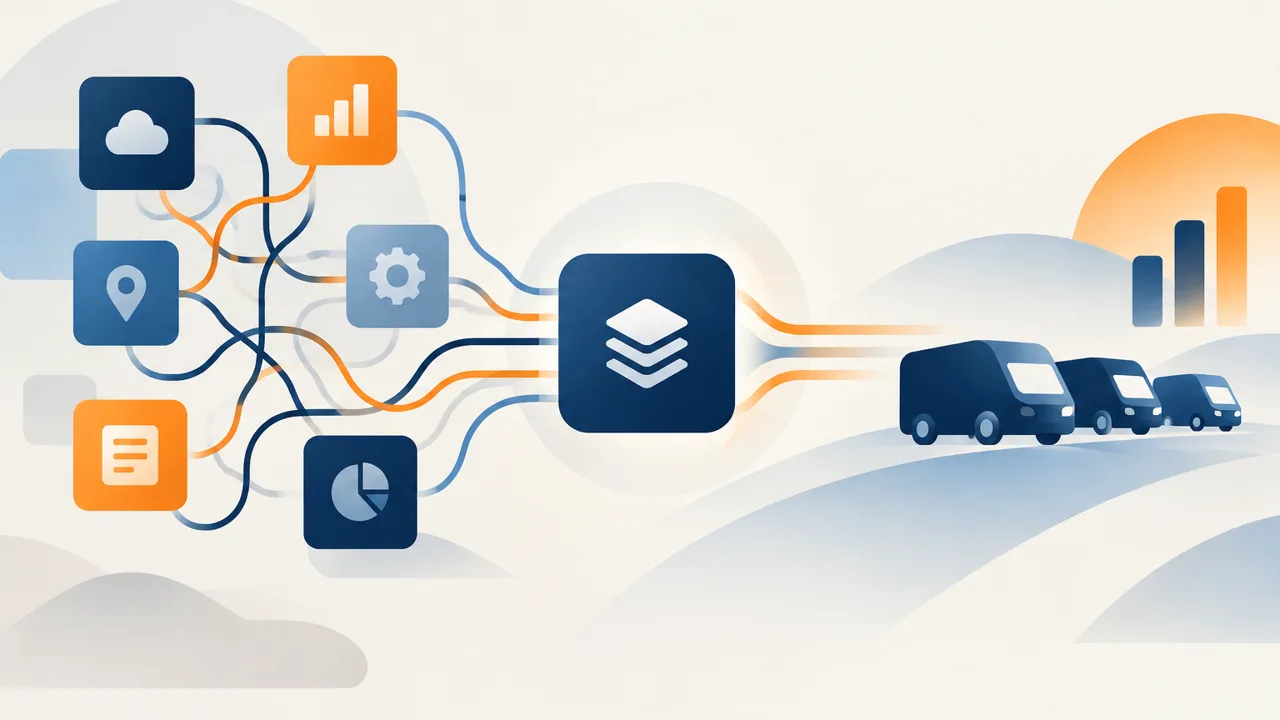
Most small fleet owners buy software to solve a specific pain point—like a compliance violation or a missed invoice—only to end up with five different apps that require separate logins and manual data entry. This fragmentation creates a "hidden payroll" where owners spend ten hours a week acting as a human bridge between their ELD, their factoring portal, and their load board.
True efficiency doesn't come from the most expensive suite; it comes from a lean, interoperable stack that protects your sleep and your margins. This playbook identifies the essential tech components every 1-to-20 truck operation needs and explains how to build a high-performance system on a bootstrap budget.
Why the enterprise software model fails the small carrier
The mid-market trucking software industry is built on a "per-user, per-feature" pricing model that penalizes growth. Most platforms are designed for corporate offices with dedicated IT departments, leaving the owner-operator to pay for complexity they will never use.
- High upfront implementation fees eat the working capital needed for maintenance and fuel.
- Rigid long-term contracts lock carriers into outdated hardware even when better market rates are available.
- Lack of integration forces manual double-entry, which increases the likelihood of clerical errors and FMCSA audits.
- "Free" software versions often harvest and sell carrier lane data to brokers, eroding your competitive advantage.
A framework for building the best trucking software 2024 environment
To stay competitive, you must treat your technology as a tool for asset utilization rather than just a compliance checkbox. Focus on these four pillars to ensure your tech stack pays for itself within the first thirty days.
1Centralize compliance and data entry
Your ELD should be the heartbeat of your operation, not just a recording device. When you register your ELD through a unified portal, you ensure that HOS data flows directly into your dispatching and payroll workflows. This eliminates the need for manual mileage tracking and simplifies your quarterly IFTA filings.
2Solve the cash flow gap with integrated factoring
Profitability in trucking is often a function of liquidity rather than just revenue. Instead of waiting 30 to 60 days for broker payments, use an integrated factoring solution that syncs with your load documentation. Modern systems provide transparent tracking without hidden fees or reserves, turning delivered BOLs into fuel money immediately.
3Leverage fuel-specific financial tools
Fuel is your largest variable expense, yet many small fleets use standard corporate credit cards with high interest and zero rebates. A dedicated ELD Hub fuel card provides the specific data needed to track fuel taxes accurately while offering per-gallon discounts that are usually reserved for mega-fleets.
4Digitize the RFP and freight access process
Small fleets are traditionally at the mercy of the spot market. Use technology to gain "big fleet" access to RFP freight and direct shipper contracts through platforms that aggregate demand. This shifts your business from a reactive stance—taking whatever is on the board—to a proactive strategy where you control your lanes.
The overhead trap: Why all-in-one beats best-of-breed
In the early stages of fleet growth, practitioners often fall for "best-of-breed" software—buying the best specialized tool for every single task. While this sounds logical, it creates a massive data silo problem. You end up with one app for GPS, one for maintenance, one for document scanning, and another for messaging.
When these systems don't talk, you lose the "golden thread" of information. If your maintenance software doesn't know your ELD mileage, your preventative maintenance alerts will always be wrong. If your factoring company doesn't see your dispatch data, your funding will be delayed. A consolidated platform ensures that a single data point—like a completed delivery—simultaneously updates your fuel tax records, triggers an invoice, and alerts your driver to their next load.
The total cost of office labor and software subscriptions divided by the number of loads moved, highlighting the true price of manual data entry.
How ELD HUB helps
We founded ELD HUB to break the cycle of expensive, disconnected trucking tech. We provide a $15/month compliance-first foundation that scales with you, offering everything from FMCSA-registered ELDs to access ELD Hub Capital for equipment and expansion. Teams that want this handled end to end usually start with Small Fleet Plan.
Frequently asked questions
Is a dedicated TMS necessary for a fleet of five trucks?
A full-scale TMS is often overkill for five trucks, provided your ELD and factoring tools handle basic dispatch and invoicing. Most small fleets are better served by an all-in-one ecosystem that captures load data at the source rather than paying for a standalone TMS license.
How do I ensure my ELD is FMCSA-compliant without overpaying?
Verify the device on the FMCSA’s list of registered ELDs and focus on providers that offer transparent, month-to-month pricing. Avoid "free hardware" deals that hide high monthly service fees and multi-year lock-in clauses in the fine print.
Can integrated software really help with fuel savings?
Yes, because integrated cards track the IFTA data automatically at the pump, eliminating manual receipt scanning. When this is paired with negotiated nationwide discounts, the software effectively pays for itself through reduced fuel spend and administrative hours saved.
What is the difference between a flat-rate factoring model and a traditional one?
Traditional factoring often includes "junk fees" like ACH charges, invoice processing fees, and mandatory reserves that hold back 10% of your money. A flat-rate model, like the one offered by ELD HUB, charges a single percentage with $0 reserves, giving you total transparency over your take-home pay.
Why shouldn't I just use a free load board?
Free load boards often contain stale data or "phishing" posts designed to collect carrier information. Premium freight access through a dedicated network provides vetted loads and direct-to-shipper RFPs that aren't available to the general public, leading to higher-quality miles.
How does tech help with driver retention?
Drivers stay with fleets that make their lives easier. Providing an intuitive mobile app for document scanning, clear HOS tracking, and quick payment options reduces the friction of the job, making your fleet a more attractive place to work compared to "old-school" paper-based operations.
Related guides
- Stop Burning Cash on Fragmented Fleet Technology
- Stop Data Fragmentation: The Strategic Logic of ELD and TMS Integration
- Stop Chasing Breakdowns: How Telematics Ends the Maintenance Overdraft
- The High Cost of Complacency: Why Small Fleets are Dumping Premium ELD Subscriptions