

The High Cost of Complacency: Why Small Fleets are Dumping Premium ELD Subscriptions
The High Cost of Complacency: Why Small Fleets are Dumping Premium ELD Subscriptions
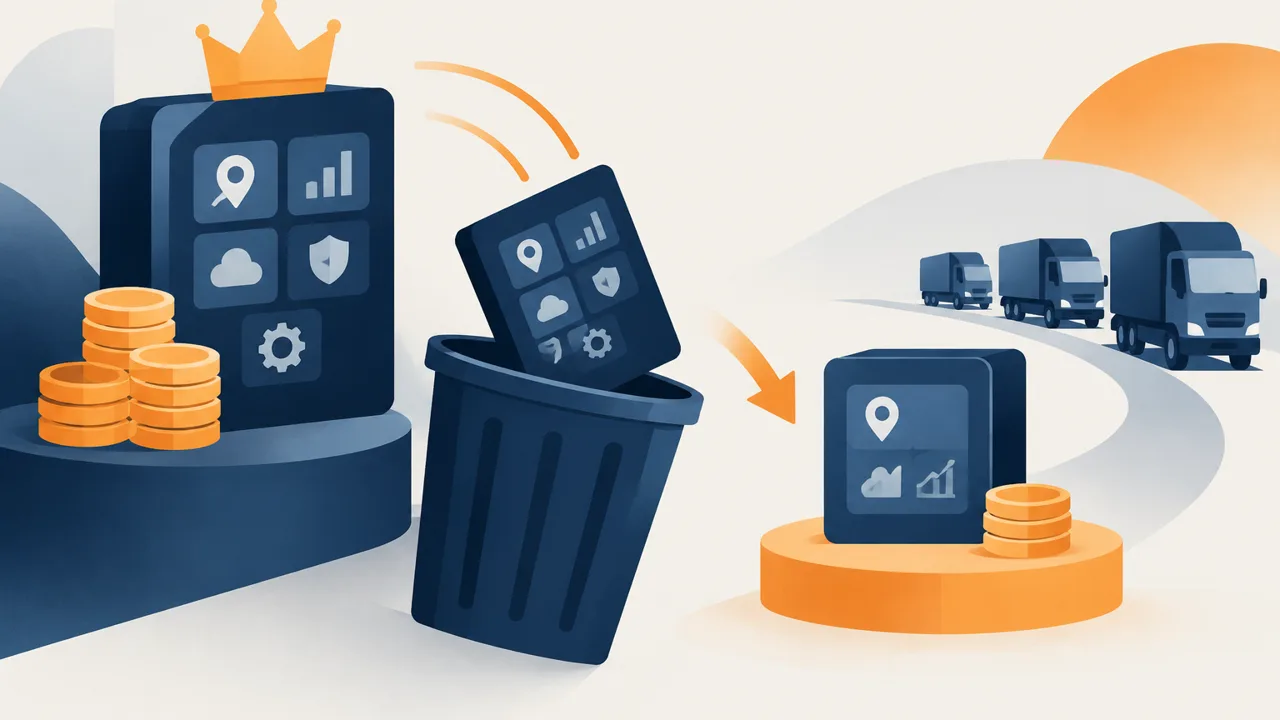
The era of the $50-per-month ELD subscription is ending for the small carrier. For years, the industry standard was a bloated "all-in-one" platform that promised to revolutionize fleet management through big data, but mostly succeeded in draining bank accounts via auto-renewals for enterprise features like driver coaching modules and advanced API integrations.
The market has shifted toward transparency and utility as operators audit tech stacks with the same scrutiny applied to fuel and insurance. This transition is about reclaiming control by choosing hardware that ensures FMCSA compliance without the "enterprise tax" typical of legacy providers.
Why the premium subscription model fails
The initial ELD mandate forced carriers into rushed contracts with providers prioritizing recurring revenue over user experience. As technology matured, the cost to provide compliant logging plummeted, yet many legacy prices remained high.
- High service fees that far exceed the actual cost of data transmission and server maintenance.
- Multi-year agreements that lock small businesses into paying for software they do not use.
- Bloated platforms designed for corporate reporting rather than the needs of a 1-to-5 truck operation.
- The realization that compliance is a baseline requirement, not a luxury feature worth a premium.
The lean compliance framework
Choosing a streamlined ELD service allows small fleets to stay agile without sacrificing the data integrity required by the DOT. This approach prioritizes core functionality over unnecessary software complexity.
1Independent Owner-Operator Setup
Single-truck businesses benefit from simple, no-fail logging systems. These operators require compliance tools that work without complex back-office dashboards.
2Family-Owned Fleet Integration
Operations where the owner handles multiple roles need systems that work out of the box. These tools require zero extensive training for dispatchers or mechanics.
3Regional Short-Haul Focus
Carriers staying within a specific radius do not need the international cross-border complexities of high-tier software. Leaner tools provide exactly what is needed for regional routes.
4Start-Up Authority Management
New businesses must minimize fixed monthly liabilities while building a carrier profile. Low-cost ELDs help maintain initial credit by reducing unnecessary overhead.
Non-negotiables for a modern ELD transition
Lowering costs does not mean lowering standards; a switch must be predicated on ensuring the fleet is not swapping high fees for high risks. The hardware should be robust enough to handle the vibration and heat of a commercial cab while maintaining clean ECM data.
- FMCSA Registration: The device must be listed on the FMCSA’s list of self-certified ELDs to avoid "no ELD" violations.
- Local Data Storage: Devices must store logs locally to ensure inspections can be completed in areas with zero cellular reception.
- Ease of Transfer: Software must support standard telematics and local transfer methods required by officers during a roadside stop.
How ELD HUB helps
Our team helps operators compete with larger fleets by providing the necessary infrastructure without the enterprise price tag. ELD HUB offers FMCSA-registered compliance solutions designed specifically for 1-to-20 truck operations, focusing on reliability and ease of use. Beyond logging, we support carriers with a full ecosystem including 1% to 2% flat-rate factoring with zero reserves and fuel cards that offer significant savings per gallon. Teams that want this handled end to end usually start with ELD for 1-Truck Fleets.
Frequently asked questions
Will switching to a cheaper ELD increase my risk of a DOT audit?
No, the FMCSA does not prioritize audits based on the brand or price of your ELD subscription. Risk is tied to your CSA scores and HOS violations; as long as the device is registered and data is accurate, you remain in compliance.
Why do some providers charge $50 a month while others charge half that?
Higher prices often cover vendor overhead like nationwide sales teams and marketing budgets. Affordable providers focus strictly on the core compliance engine, passing those savings directly to the fleet operator.
Do I have to buy new hardware if I switch providers?
In most cases, yes, because ELD hardware is typically proprietary to the provider's platform. However, the cost of new hardware is often recouped within a few months through lower monthly subscription fees.
Can a self-certified "cheap" ELD be trusted during a roadside inspection?
Yes, every ELD on the FMCSA list is self-certified by its manufacturer. Officers care about the data transfer process and the in-cab display, both of which are standardized across the industry regardless of the provider's size.
What happens to my old logs when I cancel a high-cost subscription?
Legally, you must keep six months of logs. You must download and archive these logs in a digital format before cancelling your old service, as most premium providers cut off access immediately upon contract termination.
Related guides
- Stop Burning Cash on Fragmented Fleet Technology
- Stop Data Fragmentation: The Strategic Logic of ELD and TMS Integration
- Stop Chasing Breakdowns: How Telematics Ends the Maintenance Overdraft
- The Lean Tech Stack: Scaling Small Fleets Without Bloated Software Costs