

The Hidden Mechanics of Lowering Your Fleet Insurance Premiums
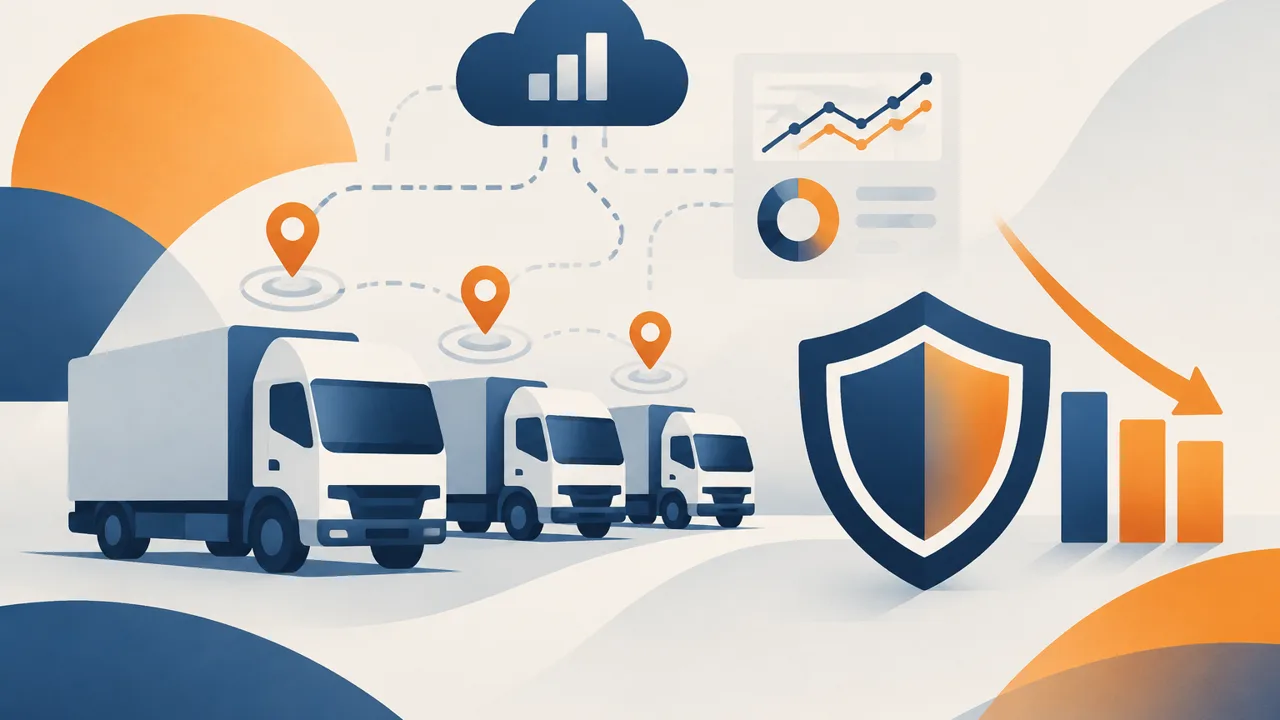
The Hidden Mechanics of Lowering Your Fleet Insurance Premiums
Insurance underwriters are moving away from historical averages and toward real-time behavioral data. Most small fleet owners treat insurance as a fixed cost or a "grudge purchase," failing to realize that every uncorrected HOS violation or sharp turn is essentially a surcharge on next year’s policy. If your data looks like a black box to an underwriter, they will price for the worst-case scenario.
To reduce trucking insurance cost, you must transition from reactive compliance to proactive risk management. This guide outlines the strategic shifts necessary for fleets with 1 to 20 trucks to gain leverage during renewals and secure more favorable terms.
Why traditional insurance strategies fail small fleets
Most operators wait until 30 days before their policy expires to shop for quotes, leaving them with no time to fix the underlying data issues that drive prices up.
- Relying on "average" industry rates ignores the fact that personalized telematics data can override general risk pools.
- Ignoring the impact of "conditional" safety ratings which act as an automatic disqualifier for the most competitive insurance tiers.
- Failing to dispute incorrect inspections via DataQs, which allows erroneous violations to sit on your permanent record.
- Overlooking the transition from basic insurance for new carriers to mature risk portfolios that reward clean operating data.
The framework for sustainable premium reduction
Managing insurance costs is a year-round operational discipline, not a once-a-year administrative task.
1Audit your ELD data for "invisible" risk
Insurance providers increasingly look at the frequency of Form and Manner violations. Even if a driver isn't involved in an accident, a pattern of sloppy logs suggests a lack of administrative oversight. Use your ELD dashboard to identify drivers who consistently trim their breaks or miss signatures before these habits become a liability.
2Prioritize CSA score improvement
Your Safety Measurement System (SMS) data is the first document an underwriter pulls. Focus on the "Unsafe Driving" and "HOS Compliance" BASICs, as these carry the most weight in pricing algorithms. A single point reduction in your CSA score can be the difference between a standard market and a surplus lines carrier with double the premium.
3Implement a formal fleet risk management plan
Underwriters offer better rates to fleets that document their safety protocols. This doesn't require a 100-page manual, but it does require written procedures for driver hiring, vehicle maintenance, and post-accident analysis. Showing a carrier that you have a process for terminating high-risk drivers makes you a "preferred" risk.
4Leverage telematics for "Soft" data points
Modern insurance for mid-market and small fleets often includes "safety credits" for using specific technology. Hardware that tracks hard braking, rapid acceleration, and speeding allows you to prove your fleet is safer than the industry average. This data provides the "why" behind your safety record, giving the underwriter a reason to override a generic price hike.
The relationship between ELD logs and premium leverage
Clean ELD logs are the most undervalued asset in a fleet’s financial portfolio. When an underwriter sees a high percentage of "unidentified driving time" or frequent log edits, they assume the carrier is hiding HOS non-compliance. This perceived lack of integrity results in a higher "uncertainty" premium.
In contrast, a carrier that can produce a history of 100% ELD uptime and minimal violations proves they are in control of their operations. By utilizing fleet capital & insurance solutions that align with rigorous logging standards, you transition from a commodity buyer to a strategic partner for the insurance company. This transparency allows you to request higher deductibles safely, which is a classic tactic to lower monthly premiums without increasing actual operational risk.
How ELD HUB helps
ELD HUB provides the technical and financial infrastructure that modern underwriters demand from safe carriers. By utilizing our FMCSA-registered ELD compliance tools, you generate the clean data trail needed to negotiate lower rates. We further support your bottom line by providing an ELD Hub fuel card to offset operational costs, ensuring that the savings you find in insurance aren't lost to high fuel overhead. Teams that want this handled end to end usually start with Small Fleet Plan.
Frequently asked questions
How much does a high CSA score actually impact my premium?
A high CSA score can increase premiums by 20% to 50% or lead to non-renewal. Carriers look at your percentiles across different BASICs to determine if you are a "safe" bet or a "distressed" risk. If you are in the top 65th percentile for Unsafe Driving, you will likely be pushed into the high-risk surplus market.
Can a new authority get competitive insurance rates?
New authorities typically pay the highest rates because they lack a two-year data history. However, you can offset this by starting with a high-quality ELD system and a formal safety plan from day one. Some specialized providers will offer a "new venture" discount if you can prove you use telematics to monitor driver behavior.
Do insurance companies check ELD logs during a claim?
Yes, in the event of a significant accident, insurance adjusters and opposing counsel will subpoena ELD records immediately. If the logs show the driver was over their hours or the system was tampered with, the insurance company may deny the claim or settle for a significantly higher amount. This directly impacts your future insurability.
Is it better to have a high deductible to save on premiums?
Increasing your deductible is a viable way to reduce trucking insurance cost if you have the cash reserves to cover a loss. However, this only works if your fleet risk management is strong enough to prevent small, frequent claims. For many small fleets, the immediate premium savings of $2,000–$5,000 are worth the risk of a higher out-of-pocket cost per event.
Does driver experience affect the fleet policy more than the DOT record?
For fleets of 1 to 20 trucks, individual driver MVRs are scrutinized heavily. A single driver with a major violation (DUI, excessive speeding, or a reckless driving charge) on their three-year record can cause the premium for the entire fleet to jump. Maintaining a strict hiring standard is the most effective way to keep your fleet-wide insurance costs predictable.
Related guides
- Best ELD for Owner-Operators: What Actually Matters in 2026
- How Much Do Owner-Operators Make? A Break-Even Worksheet
- Flatbed vs. Dry Van: The Real Cost Math for Small Fleets
- The Hidden Cost of Paper Profit: Why Shipper Credit Checks Define Fleet Survival