

Flatbed vs. Dry Van: The Real Cost Math for Small Fleets
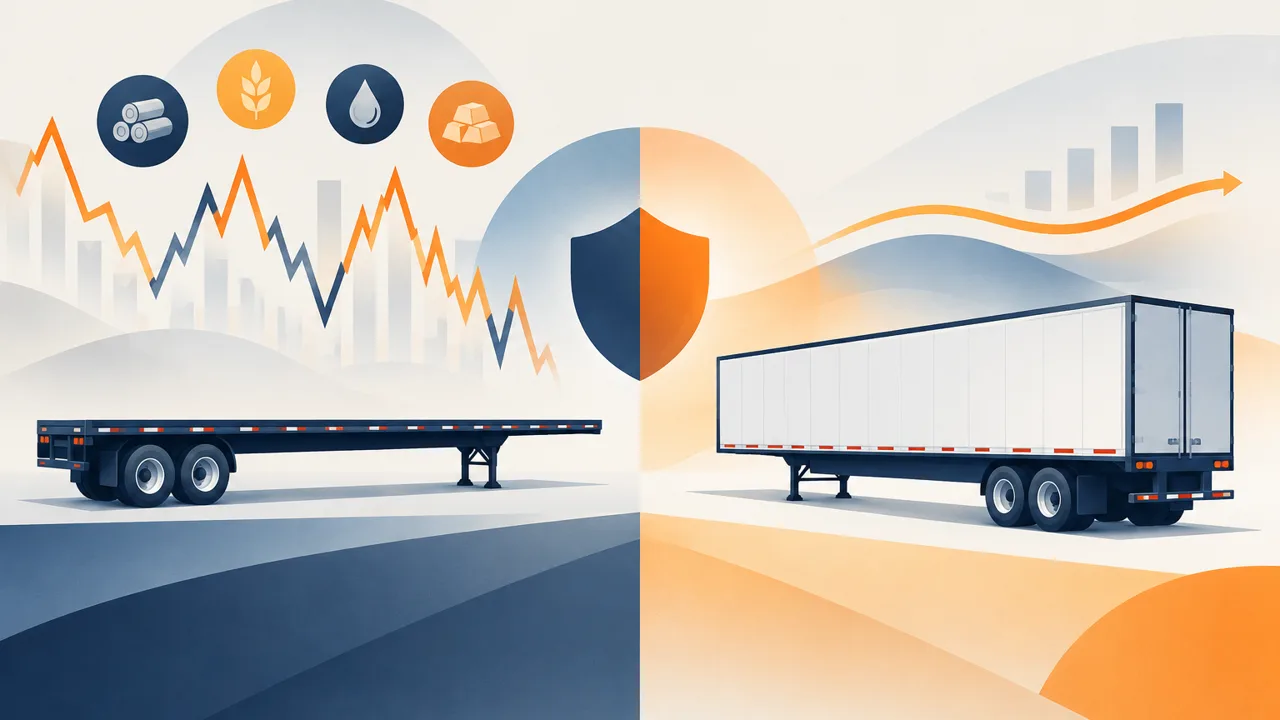
The Hard Math of Equipment Selection: Flatbed vs. Dry Van in 2024
Choosing between a trailer that protects cargo from the elements and one that requires a winch bar and chains is no longer a matter of preference. In the current market, the decision dictates your entire overhead structure, from insurance premiums to the types of drivers you can recruit. Most operators look at the "rate per mile" on a load board and make a snap judgment, ignoring the reality that a $4.00 per mile flatbed load can be less profitable than a $2.50 dry van run once securement time and deadhead are factored in.
This guide breaks down the unit economics of the most profitable trucking niches for small fleets. Whether you are adding your second truck or scaling to twenty, you need to understand where the hidden costs live and how to leverage your equipment to win higher-paying freight.
Why superficial rate comparisons lead to fleet failure
Most small fleet owners fail because they confuse "high rates" with "high profit." Equipment selection is a long-term hedge against market cycles, and choosing incorrectly creates several structural disadvantages:
- Relying on seasonal spikes in flatbed construction cycles without a plan for the winter slowdown.
- Overestimating dry van utilization while ignoring the hours lost at congested distribution centers.
- Ignoring the specialized insurance requirements and tarping liability that come with open-deck freight.
- Failing to account for the physical toll on drivers, which directly impacts retention in a tight labor market.
The framework for equipment-driven profitability
1Evaluate your geographic freight lane density
Profitability is born in the lanes you frequent, not the ones you visit once. Dry van freight is ubiquitous, but it requires high-volume lanes to keep the wheels turning and minimize unpaid miles. Before buying a trailer, analyze where your preferred shippers are located and whether those regions support a consistent backhaul.
2Audit the operational complexity vs. rate premium
Flatbed freight consistently pays more per mile because it is harder to do. You are being paid for the specialized knowledge of load securement and the risk of hauling unconventional dimensions. If your operation lacks the patience for 90-minute securement processes, the higher rate will quickly be eaten by decreased velocity.
3Factor in the total cost of ownership
A standard dry van trailer is a "set it and forget it" asset with minimal maintenance beyond tires and brakes. Flatbeds require a constant reinvestment in straps, chains, binders, and tarps, which are easily lost or damaged. Use a load rate calculator to determine if the rate premium on specialized freight actually covers these recurring equipment expenses.
4Align your equipment with your driver profile
Your equipment is your best driver recruiting tool. Experienced flatbedders often enjoy the physical nature of the work and the higher pay, but they are a smaller pool of talent. Dry van allows for a broader recruiting base but often suffers from higher turnover as drivers grow frustrated with warehouse delays.
The volatility gap: Contract vs. Spot
The most profitable trucking niches often exist where contract rates stay steady while the spot market enters a free-fall. Dry van freight is the first to feel the impact of a retail slowdown, as consumer goods are highly elastic. When the trucking market outlook suggests a dip in consumer spending, flatbed operators often remain insulated because infrastructure and industrial projects move on multi-year timelines.
However, flatbedders face a "cliff" when the housing market stalls or steel production slows down. The smartest operators maintain a mix of equipment or secure long-term contracts that provide a floor for their revenue. By using an ELD Hub fuel card, owners can mitigate the impact of price spikes that often hit specialized carriers harder due to the less aerodynamic nature of open-deck loads.
How ELD HUB helps
ELD Hub simplifies the complexity of running a small fleet by removing the administrative and financial friction that kills margins. Whether you are hauling steel coils or palletized consumer goods, our platform provides FMCSA-registered compliance and flat-rate factoring with no hidden reserves. We give you the cash flow certainty needed to invest in the right equipment at the right time. Teams that want this handled end to end usually start with Small Fleet Plan.
Frequently asked questions
Which equipment is better for a new owner-operator?
Dry van is generally recommended for new operators because it has a lower barrier to entry and lower equipment costs. It allows you to focus on learning the business side of trucking without the added liability of load securement. Once you have established a safety record and stable cash flow, transitioning to flatbed or specialized freight can provide a path to higher margins.
Does flatbed freight really pay more in a down market?
Yes, flatbed rates tend to be more resilient during economic shifts because industrial and infrastructure freight is less volatile than retail goods. While dry van rates can plummet due to overcapacity, the specialized nature of flatbed work limits the number of competing trucks. This scarcity of equipment helps maintain a higher rate floor even when total freight volume is lower.
What are the hidden costs of flatbedding?
The primary hidden costs are physical equipment and time. Professional-grade tarps can cost several hundred dollars each and require frequent repair or replacement. Additionally, the time spent securing and tarping a load—often in inclement weather—is time the truck is not moving, which can lower your overall miles per week compared to dry van.
How does trailer choice affect insurance premiums?
Flatbed insurance premiums are typically higher than dry van premiums due to the increased risk of cargo damage and personal injury during loading. Improperly secured loads can lead to catastrophic accidents, and insurers price that risk accordingly. Carriers must maintain high safety scores and rigorous training programs to keep these costs manageable.
Can I switch between equipment types easily?
Switching requires more than just swapping trailers; it requires a shift in your business model and driver training. Moving from dry van to flatbed necessitates an investment in securement gear and a driver who understands load physics. Conversely, moving from flatbed to dry van may require joining large-scale freight networks to ensure you are not sitting idle between loads.
Is the dry van market too "crowded" for small fleets?
While the dry van market is the most competitive, it is also the largest. Small fleets can thrive by focusing on niche lanes, high-service local accounts, or power-only arrangements where they provide the tractor for larger carriers' trailers. Profitability in dry van is less about the equipment and more about the efficiency of your back-office and fuel management.
Related guides
- Best ELD for Owner-Operators: What Actually Matters in 2026
- How Much Do Owner-Operators Make? A Break-Even Worksheet
- The Hidden Cost of Paper Profit: Why Shipper Credit Checks Define Fleet Survival
- The Hidden Math of Profitable Fleets: Mastering Semi Truck TCO