

Streamlining Quarterly Filings with ELD Data Automation
Streamlining Quarterly Filings with ELD Data Automation
Manual IFTA tracking is a structural risk to a small fleet’s cash flow. Many operators still rely on driver-recorded paper trip sheets and physical fuel receipts, a process that is prone to human error and retroactive "estimation" when data is missing. By the time a quarterly filing is due, reconstructing the exact miles driven in each jurisdiction becomes a forensic exercise rather than a simple administrative task.
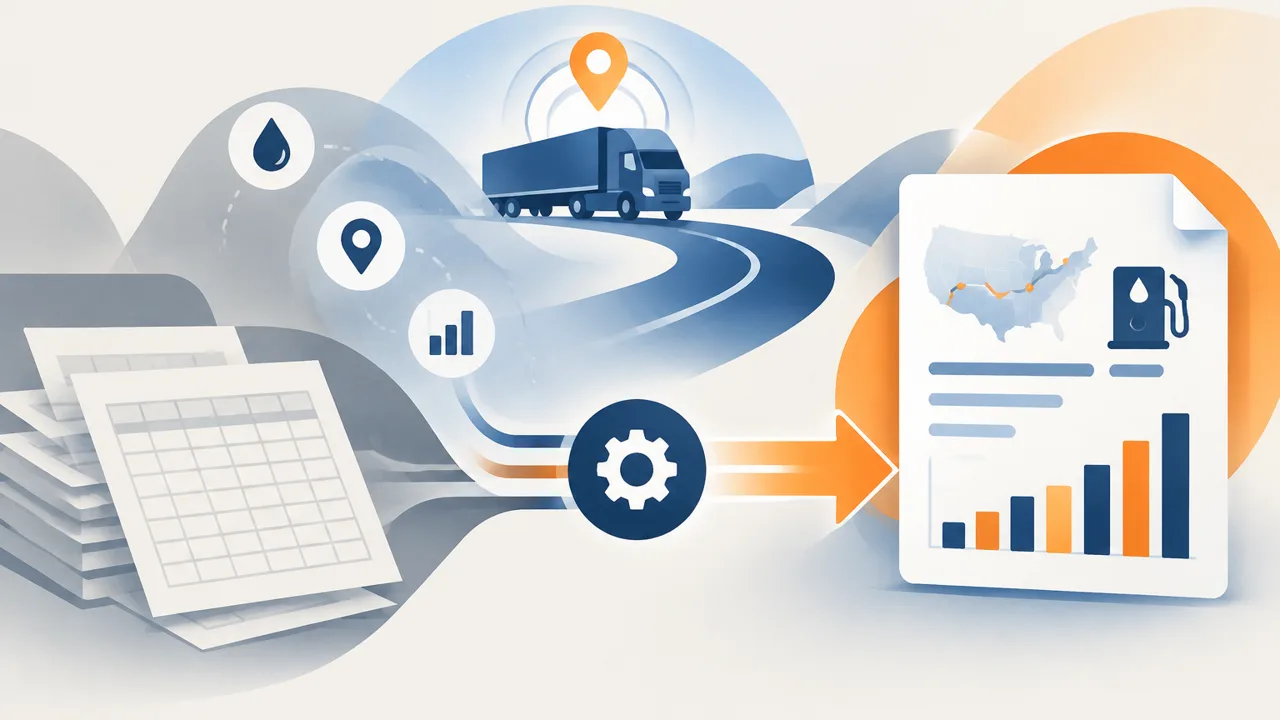
Modernizing your workflow starts with understanding how to automate IFTA reporting by leveraging the high-frequency GPS data produced by your telematics device. This guide focuses on the technical transition from raw logbook data transfer to a processed, audit-ready report for carriers running 1 to 20 power units.
Why Manual IFTA Reporting Is a Liability
Relying on hand-written logs or disconnected spreadsheets exposes a fleet to Audit Risk and operational friction. Even small discrepancies in mileage or fuel purchases can lead to penalties that outstrip the cost of automated software.
- GPS data captured by the engine diagnostic port provides a higher level of accuracy than odometer readings manually entered by drivers at every border crossing.
- Manual transcription of fuel receipts frequently misses non-taxable miles or state-specific exemptions that could save the company money.
- Auditors look for gaps between the total mileage reported on IFTA and the total miles logged on ELD records; automation ensures these two datasets are identical.
A calculation of the difference between reported odometer readings and actual GPS-tracked mileage, used by auditors to identify underreported engine hours.
The Framework for Technical IFTA Automation
1Hardwire for Data Integrity
The hardware choice is the foundation of the data pipeline. Using a PT-30 or IOSix device connected directly to the J1939 or J1708 port ensures you are capturing true odometer and engine data rather than relying on a smartphone's mobile GPS, which can drift or lose signal. This direct connection ensures every mile is accounted for, even in areas with poor cellular coverage.
2Standardize Logbook Data Transfer
To automate the filing, the raw pings from your hardware must be processed into jurisdiction-specific segments. You need a system that automatically calculates the exact point of entry and exit for every state line crossed. This turns a month of driving into a simplified table showing total miles per state, removing the need for drivers to note "border crossings" in their remarks.
3Integrate Your Fuel Purchase Stream
Mileage is only half of the IFTA equation. By using a fleet fuel card, you can import digital transaction records directly into your reporting dashboard. This eliminates the need to scan physical receipts and manually match them to specific trucks, as the software pairs the fuel gallonage with the GPS location of the vehicle at the time of the pump transaction.
4Run Monthly Reconciliation Reports
Waiting until the end of the quarter to check your data is a mistake. Set a schedule to review your automated reports every 30 days. This allows you to catch "unidentified driving" events or hardware malfunctions while the details are still fresh, ensuring that when the tax deadline arrives, you are simply hitting "export" rather than fixing errors.
The Data-Cutover Problem
One of the primary hurdles in IFTA automation is the "mid-quarter migration." If you switch from manual logs to an automated system in the middle of a reporting period, you must maintain a hybrid record. The safest protocol is to complete the current quarter manually while running your new ELD-based system in parallel. This allows you to verify that the automated mileage matches your manual tracking before you rely entirely on the digital export for a legal filing.
How ELD HUB helps
ELD HUB simplifies the compliance stack by providing the technical infrastructure required for precise data capture. Our FMCSA-registered hardware plugs directly into your truck’s diagnostic port, allowing you to register your ELD and immediately begin streaming jurisdiction-specific mileage data to our portal. This data-first approach pairs naturally with our financial tools, such as factoring with OTR to help you keep cash flow consistent while the back-office automation handles the quarterly tax grunt work. Teams that want this handled end to end usually start with Small Fleet Plan.
Frequently asked questions
Does IFTA automation eliminate the need to keep fuel receipts?
No, the IFTA articles of agreement still require carriers to maintain records of fuel purchases for four years. While automation digitizes the data for filing, you should still keep digital copies or original receipts as secondary proof in the event of an audit to verify the tax-paid status of the fuel.
How does the ELD distinguish between personal conveyance and taxable miles?
Most automated systems will categorize all miles as taxable unless specifically flagged. If a driver is using personal conveyance, the software must be configured to subtract those miles from the IFTA total, though state laws vary on whether those miles are truly exempt from fuel tax.
What happens if the GPS loses signal during a trip?
Professional-grade devices like the PT-30 use "dead reckoning" or internal memory to log odometer readings from the engine's ECM regardless of cellular or GPS signal. When the device regains a connection, it uploads the total mileage change, and the software "fills in" the path, ensuring no miles are missed for tax purposes.
Can I include fuel purchased at retail stations if I don't use a fuel card?
Yes, but you will have to manually enter that data into your IFTA software. To fully automate the process, all fuel data must come from a digital feed, which is why integrated fuel cards are considered a best practice for small fleet operators.
How do I handle IFTA if I operate in a non-IFTA jurisdiction?
If you travel in jurisdictions like Alaska, Hawaii, or parts of Mexico that are not members of IFTA, your automated system must be configured to exclude those miles from the standard quarterly filing. Most top-tier ELD software allows you to toggle these settings to ensure you aren't overpaying into the IFTA pool.
Related guides
- Stop Burning Fuel at the Gate: Mastering Dock-Specific Navigation
- Mastering the Fuel Surcharge to Protect Fleet Margins
- The High Cost of Heavy Feet: A Practical Guide to Eco-Driving
- Stopping the Profit Drain: A Realistic Guide to the Best Trucking Fuel Card