

Moving Beyond Greenwashing with Data-Driven Sustainable Fleet Management
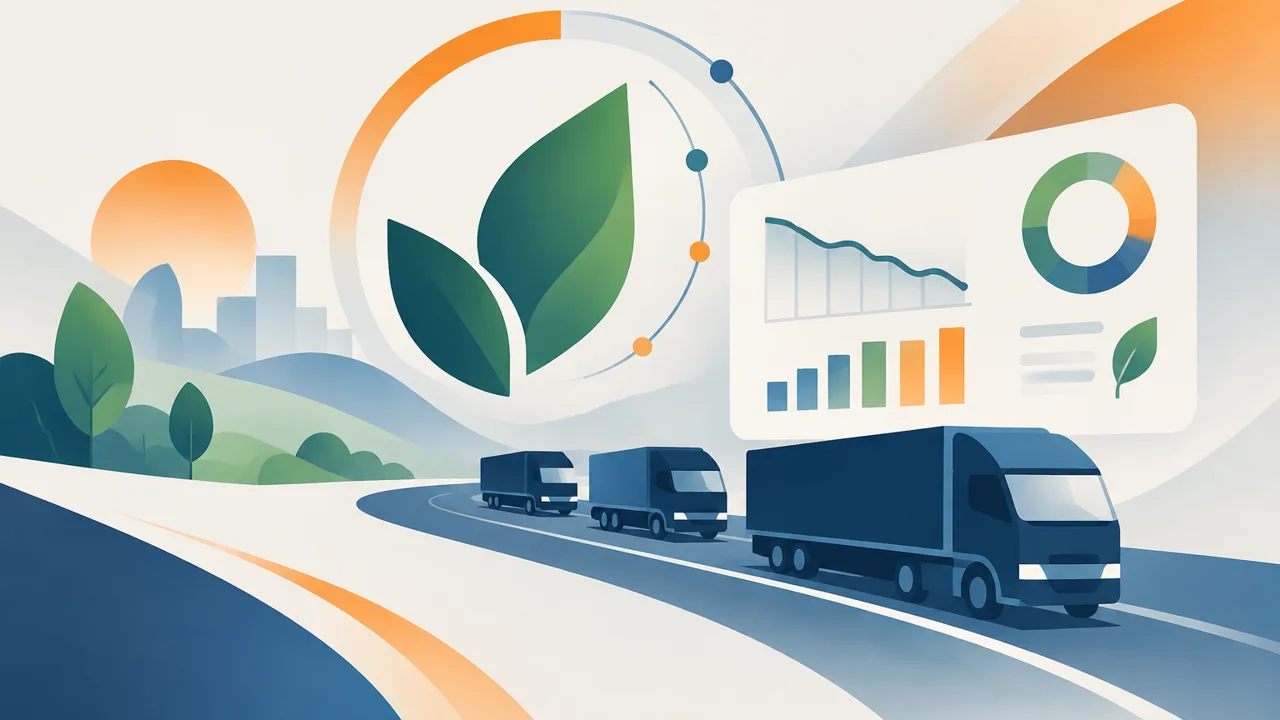
Moving Beyond Greenwashing with Data-Driven Sustainable Fleet Management
Fortune 500 shippers are under immense pressure to report Scope 3 emissions, which includes the carbon footprint of every truck moving their freight. For a small fleet owner, "sustainability" often sounds like an expensive distraction, but the market has shifted: if you cannot provide data on your fuel burn and emissions, you will eventually be locked out of premium RFP cycles.
This guide outlines how to use your existing telematics infrastructure to build a credible carbon reduction strategy. We focus on low-cost, high-impact operational shifts that satisfy shipper requirements while simultaneously lowering your most volatile overhead expense: fuel.
Why traditional green initiatives fail for small carriers
Most carriers struggle with sustainability because they treat it as an equipment problem rather than an information problem. Buying electric Class 8 trucks is financially out of reach for most 10-truck fleets, leading many to believe they cannot participate in green trucking solutions. Real progress fails when operators:
- Rely on statewide fuel averages rather than truck-specific burn rates.
- Ignore the massive fuel penalty associated with "hurry up and wait" detention at shippers.
- Fail to document the correlation between driver behavior and miles-per-gallon (MPG) gains.
- Overlook the fact that the most sustainable mile is the one that was never driven.
A calculation of CO2 emissions relative to the weight of the freight and the distance traveled, used by shippers to compare carrier efficiency regardless of fleet size.
The playbook for reducing emissions through telematics
1Baseline your idle time
Idle reduction is the fastest way to lower your carbon footprint without spending a dollar on new hardware. Telematics software tracks exactly when an engine is running without movement, allowing you to identify outliers. Small fleets often find that a few drivers are responsible for 80% of preventable idling.
2Implement predictive routing
Sustainable fleet management relies on minimizing "empty miles" and avoiding heavy congestion. Real-time traffic data integrated with dispatching tools ensures trucks stay in their optimal power band rather than idling in gridlock. Every mile cut from a trip is a direct, measurable reduction in the fleet's total carbon output.
3Monitor and coach driver behavior
Rapid acceleration and hard braking are not just safety issues; they are fuel-intensive habits. Use telematics dashboards to rank drivers on smooth operation. Transitioning a fleet from aggressive driving to steady-state cruising can improve fuel efficiency telematics by double digits across the entire operation.
4Optimize maintenance for combustion efficiency
A poorly maintained engine burns more fuel to produce the same amount of torque. Use remote diagnostics to stay ahead of clogged filters and improper tire pressure. Properly inflated tires and clean air intakes are the simplest forms of emission control available to an owner-operator.
The role of data in the bidding process
Shippers are increasingly asking for "environmental scorecards" during the RFP process. They want to see that their carriers are actively reducing emissions trucking through technology rather than just making verbal promises. This data allows a 5-truck fleet to prove they are more efficient than a 500-truck fleet, leveling the playing field for high-margin contracts.
When you can export a report showing a 5% year-over-year decrease in fuel consumption, you satisfy the shipper’s procurement requirements and their ESG (Environmental, Social, and Governance) goals. This visibility transforms your telematics from a regulatory burden into a sales tool that justifies higher rates.
How ELD HUB helps
We provide the technical backbone that allows small fleets to operate with the sophistication of a national carrier. By using our FMCSA-registered ELD, you capture the raw data necessary to prove your fuel efficiency to potential partners. Our platform streamlines the bridge between compliance and profitability, ensuring that every gallon saved stays in your pocket while you build a greener profile. Beyond visibility, we offer a negotiated fuel card that rewards efficient operators with significant per-gallon discounts at nationwide stops. Teams that want this handled end to end usually start with Small Fleet Plan.
Frequently asked questions
Do I need to buy electric trucks to have a "green" fleet?
No. Most shippers today are focused on incremental efficiency gains from your existing diesel fleet. Showing a measurable reduction in idle time or a higher MPG average through better routing is currently more valuable than a small-scale pilot of unproven electric equipment.
How does idling specifically impact my carbon reporting?
A typical heavy-duty truck can burn roughly one gallon of fuel per hour while idling. For a shipper, that fuel burn represents "dead" emissions—carbon released without any movement of freight. Removing 2 hours of daily idle time per truck across a small fleet generates a massive, documented drop in your carbon footprint.
Can telematics help if I use older trucks?
Telematics is actually more critical for older fleets because the variance in fuel efficiency is much higher. The data allows you to identify which specific older units are becoming too expensive to run, helping you prioritize business financing for equipment upgrades that will have the biggest impact on your bottom line.
Why do shippers care about my emissions if I’m just a subcontractor?
Large corporations must report their "Scope 3" emissions, which are the indirect emissions in their value chain. Since transportation is a significant part of that chain, they are under pressure to select carriers who can provide data-backed proof of efficient operations.
Is the cost of these "green" tools worth it for a 1-5 truck fleet?
The tools used for sustainability—ELDs, fuel sensors, and GPS routing—are the same tools used for basic profitability. Lowering your carbon footprint is a byproduct of running a tighter, more data-driven business. The "cost" is usually offset by the fuel savings alone within the first few months.
Related guides
- FMCSA Revoked My ELD: What Drivers and Carriers Must Do
- ELD Log Book Explained: How Electronic Logs Replace Paper
- ELD for Box Trucks: When You Need One and When You Don't
- Defeating Market Consolidation: A Blueprint for the Small Carrier