

Defeating Market Consolidation: A Blueprint for the Small Carrier
Defeating Market Consolidation: A Blueprint for the Small Carrier
The era of the "unplugged" owner-operator is ending, but not for the reasons most analysts suggest. It isn't just about fuel prices or spot rates; it is about the massive data disparity between mega-fleets and the small carrier. Large enterprise fleets use integrated stacks to squeeze every cent out of a mile, while small operators are often buried under disconnected apps and predatory factoring rates.
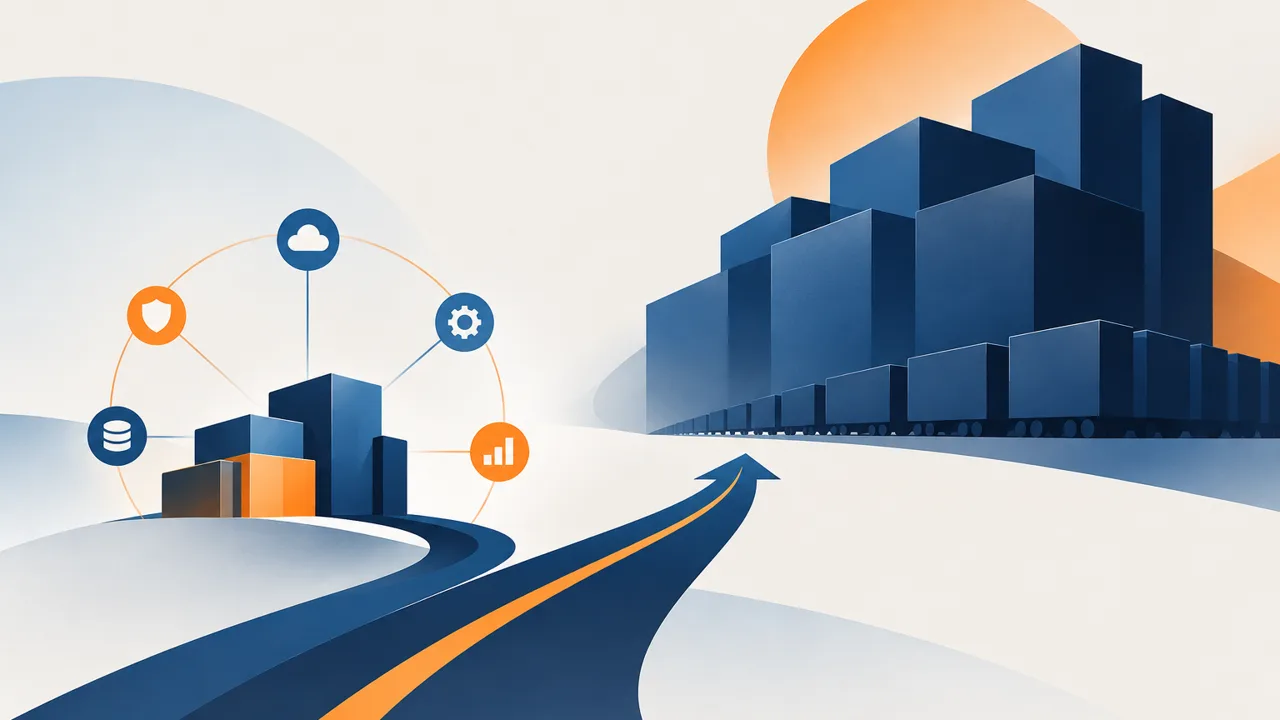
The path forward requires a shift in how small carriers view their technology. It is no longer a "required cost" for compliance, but a defensive perimeter against industry consolidation. This guide outlines how small fleets can adopt the same technological advantages as the majors without the enterprise price tag.
Why the traditional small fleet model is breaking
For decades, small carriers relied on grit and personal relationships to stay profitable. In a digital-first freight market, those assets are being neutralized by automated brokerage systems and aggressive fleet scaling.
- Fragmented data leads to "leakage" where small fleets overpay for fuel, insurance, and maintenance because they lack aggregated buying power.
- Compliance-only ELD setups provide no operational ROI, turning a necessary piece of hardware into a pure overhead expense.
- Slow cash flow from traditional invoicing hinders the ability to jump on high-value loads or expand the fleet when the market turns.
- Limited visibility into tier-one RFPs leaves small carriers fighting for scraps on the spot market instead of securing stable, contracted freight.
The technical non-negotiables for the modern operator
To survive the future of fleet management, operators must move beyond basic logging. The goal is to build an ecosystem where every mile driven generates data that lowers your overhead.
1Centralize the financial engine
Stop treating factoring and fuel as separate silos. When your FMCSA-approved ELD integrates directly with your cash flow, you eliminate the administrative gap between delivering a load and getting paid. Real-time logging data validates your work instantly, allowing for flatter freight rates and faster capital access.
2Transition from tracking to predictive AI
AI in trucking is often dismissed as a buzzword, but its practical application is simple: automated routing and preventative maintenance alerts. Future-proof fleets use sensors to predict a breakdown before it happens, saving thousands in emergency repairs and missed delivery windows. Small carriers must adopt tools that offer these insights without requiring a dedicated IT department.
3Aggregate buying power through ecosystems
Large fleets get massive discounts because they buy in bulk. Small carriers can achieve similar results by joining technology ecosystems that negotiate on behalf of thousands of trucks. Utilizing a fleet fuel card is the first step in moving from retail prices to wholesale margins, effectively disrupting fleet services that rely on individual carrier inefficiency.
4Solve for the driver, not just the truck
The driver shortage is actually a shortage of respect and efficiency. The next generation of CDL drivers expects digital tools that simplify their day, not complicate it.
The shift from compliance to competitive advantage
The industry is moving toward a "Strangler-Fig" model of technology adoption. Instead of replacing everything at once, successful carriers are wrapping their existing operations in a digital layer that slowly replaces manual processes. This starts with the ELD. Formerly a "snitch in the cab," the ELD is becoming the primary data gateway for the entire business.
The measure of how much an ecosystem reduces the cost-per-mile by automating back-office tasks and maximizing fuel rebates.
When your ELD connects to your capital, you no longer need to apply for a loan every time you want to add a truck. Instead, your performance data serves as your creditworthiness. This is how small fleets scale during a downturn while others are exiting the market.
How ELD HUB helps
ELD HUB was built to bridge the gap between the owner-operator and the enterprise. We provide a comprehensive ecosystem that includes 1% to 2% flat-rate factoring with zero reserves, ensuring your cash flow stays ahead of your expenses. By offering working-capital financing alongside our compliance tools, we enable small carriers to act with the speed and scale of a much larger organization while maintaining their independence. Teams that want this handled end to end usually start with Small Fleet Plan.
Frequently asked questions
Will AI replace the need for small fleet dispatchers?
AI won't replace the human element, but it will handle the rote tasks like checking weather patterns or verifying detention time. This allows dispatchers to focus on building relationships with brokers and finding higher-paying backhauls. The goal is to make a single dispatcher as effective as a team of five.
How does integrated factoring differ from traditional factoring?
Traditional factoring often involves manual paperwork and hidden fees for every transaction. Integrated factoring uses your ELD and TMS data to verify loads instantly, allowing for lower flat rates and eliminating the need for cash reserves that tie up your liquidity.
Can a one-truck carrier actually get "enterprise" fuel discounts?
Yes, through an ecosystem model. By using a fuel card that aggregates the volume of thousands of small carriers, a single-truck operator can access per-gallon discounts at major stops that were previously reserved for fleets with 500+ power units.
Is the hardware for these new systems difficult to install?
The future of fleet management is "plug-and-play." Most modern hardware connects directly to the ECM port and syncs via Bluetooth to a smartphone or tablet. The focus has shifted from complex wiring to seamless software integration.
What is the biggest risk of staying with a "legacy" ELD provider?
The biggest risk is data isolation. If your ELD doesn't talk to your factoring, your insurance, or your fuel card, you are leaving money on the table through administrative friction. Legacy providers often lack the API infrastructure to participate in a modern trucking ecosystem.
Related guides
- FMCSA Revoked My ELD: What Drivers and Carriers Must Do
- ELD Log Book Explained: How Electronic Logs Replace Paper
- ELD for Box Trucks: When You Need One and When You Don't
- Moving Beyond Greenwashing with Data-Driven Sustainable Fleet Management