

Survival Guide for the New Entrant Safety Audit
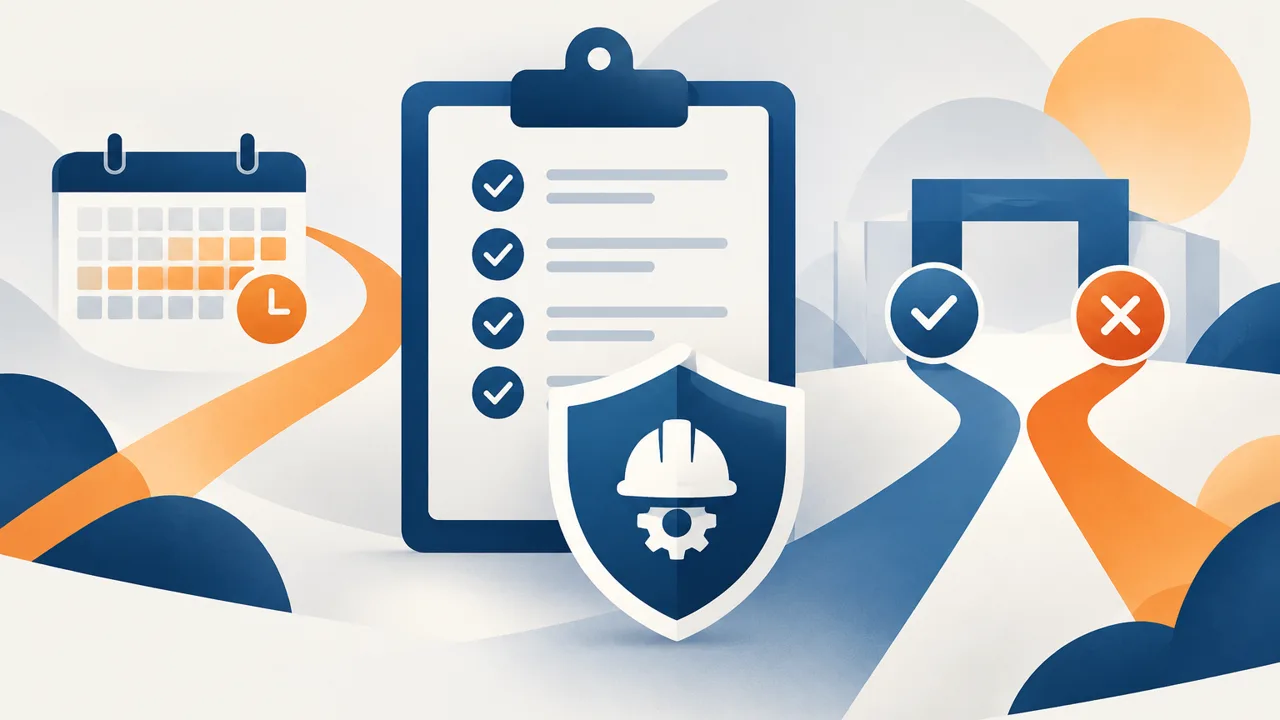
Surviving the first year as a new motor carrier
The first year of operating authority is a minefield of administrative triggers. Most new owners focus exclusively on securing high-paying loads, only to be blindsided by the FMCSA’s mandatory check-in, which serves as a formal examination of their ability to follow Federal Motor Carrier Safety Regulations (FMCSRs).
This guide focuses on the high-hazard violations that shut down new carriers before they reach their second anniversary. It addresses documentation requirements for driver qualification files, vehicle maintenance, and hours-of-service monitoring that every operator with 1 to 20 trucks must master.
Why the initial safety audit matters
The audit is a mandatory review to ensure you have effective safety management controls in place to catch errors before they lead to accidents. It dictates your insurance premiums and your ability to book freight with premium brokers for years to come.
- The Solo Owner-Operator — Ensuring your own medical certificate and MVR are updated prevents an immediate "unfit" rating.
- The Growing Family Fleet — Managing files for 3-5 drivers requires a centralized digital system to avoid missing annual reviews.
- The Power-Only Contractor — Even if you don't own the trailer, you are responsible for the safety of the power unit and the driver’s hours of service.
- The Diversified Small Fleet — Moving between different freight types requires specific insurance and hazmat endorsements that auditors scrutinize heavily.
The 90-day compliance playbook
Success is determined by how you organize your office in the first three months of operation. Waiting for the audit notification letter is too late to fix systemic record-keeping gaps.
1The Onboarding Phase
Collect all pre-employment drug test results and motor vehicle records before the driver ever touches the wheel. The goal is to establish a "Green Folder" for every active CDL holder containing their application, initial MVR, and valid medical certificate.
2The Integration Phase
Connect your FMCSA-registered ELD to your dispatching process to ensure logs accurately reflect miles driven. This phase is successful when you can demonstrate 30 days of violation-free logs backed by supporting documents.
3The Audit Preparation Phase
Conduct a self-mock audit using the FMCSA safety audit checklist to identify missing maintenance receipts or expired certificates. Compile a complete digital archive ready for upload to the FMCSA portal to ensure a seamless remote or in-person review.
Metrics for measuring administrative health
Tracking specific metrics gives you an early warning system before a DOT officer ever calls your office. Compliance is not about a thick binder; it is about having a digital paper trail that matches GPS pings to payroll.
- Violation Rate per 100 Logs: Calculate the total number of HOS violations divided by total logs processed to identify if drivers understand current mandates.
- MVR Currency Percentage: Monitor the ratio of drivers with an MVR pulled within the last 12 months to your total driver count.
- Vehicle Out-of-Service Rate: Track how many internal inspections resulted in a vehicle being sidelined to prove your maintenance program is actively finding defects.
- Clearinghouse Compliance: Maintain evidence of pre-employment queries and enrollment in a random testing consortium for all CDL drivers.
How ELD HUB helps
ELD HUB functions as the operational backbone for new carriers, moving beyond simple hardware to provide a full compliance and cash-flow ecosystem. By utilizing our FMCSA-registered ELD solutions alongside 1% to 2% flat-rate factoring, you ensure that the funds for maintenance are always available and that your data is audit-ready. To secure your authority and prepare for your first audit, our team helps operators migrate paper files into our centralized driver and vehicle management portal. Teams that want this handled end to end usually start with ELD for 1-Truck Fleets.
Frequently asked questions
What triggers an automatic failure during a New Entrant Safety Audit?
Automatic failure occurs for "High-Risk" violations, including using a driver without a valid CDL, failing to have a drug and alcohol testing program, or operating a vehicle declared out-of-service. Failure to maintain even one of these basic safety management controls results in a notice of "Unsatisfactory" and potential loss of authority.
Are digital copies of maintenance records acceptable for the DOT?
Yes, the FMCSA accepts digital records as long as they are legible and can be produced or uploaded during the audit process. Digital records are often preferred because they allow for timestamping, which proves you performed maintenance on schedule rather than backdating paperwork just before the audit.
Do I need to keep records for drivers who are no longer with the company?
You must maintain driver qualification files for at least three years after a driver leaves your employment. For the New Entrant Safety Audit, the auditor will specifically look at anyone who drove for you during the initial 12-month period, regardless of their current status.
How much time do I have to fix issues if I fail the audit?
If you fail the audit, you will receive a notice outlining the deficiencies and typically have 60 days (45 days for hazmat carriers) to submit a Corrective Action Plan (CAP). The CAP must detail the specific steps you've taken to fix the violations and how you will prevent them from happening again.
Does the audit always happen in person at my office?
No, the FMCSA now conducts many New Entrant Safety Audits remotely. You will be required to upload your documentation to the FMCSA’s Safety Electronic Records System (SERS) for a desk review by an auditor, making digital organization even more critical.
Related guides
- Split Sleeper Berth Rules Explained: 7/3 and 8/2 With Examples
- 34-Hour Restart Rule Explained: How to Reset Your 60/70-Hour Clock
- Detention Pay in Trucking: How It Works and How to Get Paid
- Pre-Trip Inspection Checklist for Truck Drivers (Printable Order)